Mary as Mother of the
Church
 By
Fr. ROY CIMAGALA, roycimagala@gmail.com
By
Fr. ROY CIMAGALA, roycimagala@gmail.com
May 25, 2026
IT is no surprise that Our
Lady is given a lot of titles and invocations, since among all men
and women, she is the one who most closely identified herself in the
life and mission of Christ as the Redeemer of Mankind. Since Christ
is her son and is the Head of the Church, it should be very logical
to call Mary also as Mother of the Church.
This has Scriptural basis
on that gospel episode where Christ, already moments before his
death on the cross, entrusted her to St. John, and through St. John,
to all of us. That’s when Christ said: “Woman, behold your
son…Behold your mother.” (Jn 19,26-27)
Thus, among the titles and
invocations mentioned in the Litany of Loreto or the Litany of the
Blessed Virgin Mary, the title of Mary as Mother of the Church had
been added relatively recently by Pope Paul at the Second Vatican
Council.
It’s a title based on her
divine motherhood of Christ, her close cooperation in Christ’s work
of redemption, and her continuing spiritual motherhood toward all
the members of the Church which is referred to as the People of God
and the Mystical Body of Christ, highlighting the unity and
interconnectedness of believers with Christ as the head.
As Mother of the Church,
she is regarded as the one who closely cooperates in the birth and
development of divine life in the souls of the redeemed. Though not
considered as above the Church, she is nonetheless seen as the
Church’s pre-eminent and singular member and an excellent exemplar
in the faith and charity.
Her maternal care and
concern for all the believers of Christ persist in heaven, always
supporting the unique mediation of Christ, the only mediator between
God and man. (cfr. 1 Tim 2,5) She is actively interceding for all
the Church faithful who are still in their pilgrim journey toward
our definitive home in heaven.
In the encyclical of St.
John Paul II, entitled “Redemptoris mater,” Mary is regarded as
“present in the Church as the Mother of the Redeemer who takes part
as a mother in that monumental struggle against the powers of
darkness.”
Besides, Mary is also
considered as exemplifying the Church. As virgin and mother, she
preserves the faith purely while generating new life through Baptism
and preaching. The Catechism of the Catholic Church describes this
aspect in the following words: “At once virgin and mother, Mary is
the symbol and the most perfect realization of the Church.” (507)
Our devotion to Mary as
Mother of the Church should lead us toward filial veneration and
imitation of her virtues. It should be expressed through prayer and
service, developed via liturgy, popular piety, and theological
study. It should always be Christ-centered for the Church’s growth
in holiness. It should avoid isolating Mary from Christ or the
Church. Rather, she should guide us toward the Eucharist and
communal solidarity.
Like any Marian devotion,
it must be developed in “harmonious subordination” to Christ-worship
that reflects God’s plan where Mary occupies a singular place. We
should consider her always in relation to the Church as the Family
of God, the People of God and the Mystical Body of Christ. In other
words, our love for Mary should be inseparably united with our love
for the Church.
Like any devotion, it
should foster both personal and communal exercises, interiorizing
piety amid modern changes.
The Philippines must
not be a launchpad for war
A press statement by Public
Interest Law Center (PILC) on the launching of a Tomahawk cruise
missile during Exercise Balikatan 2026
May 10, 2026
The Public Interest Law
Center (PILC) expresses grave concern over reports that a United
States missile system deployed in the Philippines was used to launch
a Tomahawk cruise missile from Tacloban City, Leyte toward a target
in Laur, Nueva Ecija during the Balikatan military exercises.
Regardless of claims that
the missile carried no live explosives, the significance of the
launch cannot be minimized. A weapons platform capable of long-range
offensive strikes was activated from Philippine soil. That alone
carries serious constitutional, political, and security implications
for the Filipino people.
For years, PILC has warned
that the Visiting Forces Agreement (VFA), the Enhanced Defense
Cooperation Agreement (EDCA), and the Mutual Defense Treaty (MDT)
would steadily convert the Philippines into a strategic outpost for
United States military operations in Asia. What was once defended as
“joint training” has evolved into the actual operational deployment
of advanced foreign weapons systems within Philippine territory.
The danger is obvious.
Once Philippine territory is utilized for offensive military
activity connected to the strategic objectives of a foreign power,
the country inevitably becomes entangled in conflicts beyond the
control or consent of its people. In the context of intensifying
tensions between the United States and China, actions such as these
may be interpreted by other states as direct participation or
alignment in a broader military confrontation.
It is the Filipino people
– not foreign governments, not military contractors, and not
political elites – who will suffer the consequences if the
Philippines is drawn into war.
Equally alarming is the
use of civilian and public infrastructure in connection with foreign
military operations. Communities that host these deployments are
effectively exposed to heightened security risks and transformed
into potential sites of military significance during periods of
armed conflict. This places civilians in a precarious and dangerous
position without meaningful public consultation or democratic
accountability.
The 1987 Constitution is
clear in declaring that the Philippines renounces war as an
instrument of national policy and shall pursue an independent
foreign policy anchored on sovereignty, territorial integrity, and
national interest.
PILC has consistently
maintained that these agreements are constitutionally defective and
fundamentally incompatible with genuine national independence. Far
from protecting the Filipino people, they create conditions where
the Philippines may serve as a military springboard in a regional
conflict among major powers.
In light of these
developments, PILC calls for:
1. the immediate
disclosure of all facts surrounding the missile launch and the
deployment of foreign missile systems in the country;
2. a congressional
investigation into the use of Philippine territory and facilities
for foreign military operations;
3. the suspension of
activities involving offensive weapons systems during Balikatan
exercises;
4. and the review and
eventual termination of the VFA, EDCA, MDT, and similar agreements
that compromise Philippine sovereignty and expose Filipinos to the
dangers of foreign wars.
The Philippines should
never be treated as an expendable military asset in the geopolitical
contest of powerful nations.
Our territory exists for
the welfare and security of the Filipino people – not as a staging
ground for foreign military escalation.
True love is always
linked to sacrifice
By
Fr. ROY CIMAGALA, roycimagala@gmail.com
May 7, 2026
THAT’S how true love is.
Without sacrifice, love at best can only be apparent. For love to be
true, it will always involve sacrifice and great effort, considering
the way we really are as God’s children as well as the way we are
now in our earthly condition, marked as it is by our woundedness.
Genuine love for one
another will always involve sacrifice simply because it cannot avoid
the certainty that it will always entail understanding, compassion,
the willingness to bear the burden of the others, and ultimately to
offer mercy and to forgive to anyone who may do us wrong. It will
always involve a total self-giving that is not only gratuitous but
continues to give and give even if it’s not reciprocated or, worse,
contradicted.
For love to be true, it
has to reflect Christ’s love for all of us, irrespective of how we
are to him. And that’s simply because whether we are good or not to
God, God will continue to love for the basic reason that we are all
his children.
A hallmark of genuine love
is when we are willing to give up our own interest for God and for
everybody else, reflecting the ultimate expression of love of Christ
to all of us when he made himself a sacrifice on the cross.
Yes, we can say that true
love expresses itself in sacrifice. In other words, given our
wounded condition here on earth, sacrifice is the very language of
love. Love cannot truly be love without sacrifice.
This means that unless we
love the cross, we can never say that we are truly loving. Of
course, we have to qualify that assertion. It’s when we love the
cross the way God wills it – the way Christ loved it – that we can
really say that we are loving as we should, or loving with the
fullness of love.
We have to be wary of our
tendency to limit our loving to ways and forms that give us some
benefits alone, be it material, moral or spiritual. While they are
also a form of love, they are not yet the fullness of love.
So, let’s be clear about
this point. Love will always require sacrifice. Where there is no
sacrifice, there cannot be love. Love grows only to the extent that
we are willing to make sacrifices. Without sacrifice, we sooner or
later will be swallowed up by our own egoism, our own selfishness.
And this selfishness can
take the form of laziness, attachment to certain things to the point
of self-absorption, etc. We have to be ready to do battle against
these anomalous tendencies of ours.
We should always remember
that the very essence of love is self-giving. In love, the lover
needs to lose himself in his beloved. He has to be identified with
his beloved. And this will always involve self-denial.
The self-giving and losing
that love requires would actually enrich the person in his dignity.
This way of loving conforms to what Christ himself said: “Whoever
would save his life will lose it, and whoever loses his life for my
sake will find it.” (Mt 16,25)
That’s why Christ himself
said that if anyone wants to follow him, that person has to deny
himself and, in fact, should carry the cross also. Otherwise, he
cannot love. And true love is personified in Christ himself.
In other words, we can
only love truly when we identify ourselves with Christ who precisely
commanded us to love one another as he himself has loved us. That is
why, he once said: “As the Father has loved me, I also have loved
you. Abide in my love.” (Jn 15,9)
Christ: the one for all
By Fr.
ROY CIMAGALA,
roycimagala@gmail.com
April 25, 2026
IN the gospel, we can hear
Christ declaring himself as the door of the sheepfold. (cfr. Jn
10,7-9) “I am the door,” he said. “By me, if any man enters in, he
shall be saved, and shall go in, and go out, and shall find
pastures.”
With these words, we are
made to understand that he is the sole legitimate entrance to human
salvation, the protector who safeguards the sheep (us) from harm,
contrasting himself from false leaders and prophets who would only
exploit the flock.
In other words, he depicts
himself as the only and unique mediator, as articulated once by St.
Paul when he said: “There is one God, and one mediator between God
and men, the man Christ Jesus.” (1 Tim 2,5) In short, his salvific
mission and mediation have a universal scope, and not just meant for
some people.
In this regard, we can
cite some points from a Vatican document, issued way back in 2000,
entitled “Dominus Iesus, on the Unicity and Salvific Universality of
Jesus Christ and the Church.” It responded and clarified certain
theological trends that denied Christ’s exclusive mediation and
proposed alternative and complementary revelations.
It’s definitely a delicate
topic that has to be studied well and thoroughly. But first of all,
it has to be studied in a way that is always guided by faith and not
just by pure human reason that can present all kinds of theories,
hypotheses and assumptions.
Let’s remember that the
ultimate proof of the credibility of our Christian faith is the fact
that Christ who is regarded as the fullness of revelation can truly
be regarded as God because among the many good things he did, he
finally resurrected from the dead.
Christ’s resurrection is
the pivotal event that validates his claims about his divinity. It
shows his power over death and the fulfillment of the prophecies
that showed his relationship with God – that he is not just a man, a
very special man, but first of all, he is God, the son of God who
became man for our salvation.
We need to constantly
strengthen this belief especially nowadays when there are many
elements that tend to distract and weaken our belief in Christ.
There even are open efforts to present an alternative to Christ.
We need to do everything
to make Christ the constant focus and center of our life. May
everything that we do, from our thoughts and desires to our words
and deeds, begin with Christ as the inspiration, continue with
Christ as our main help, and reach its target with Christ as the
goal himself.
Let’s convince ourselves
that any way of being and acting that is outside of this loop would
expose us to deadly moral and spiritual dangers. Thus, right from
the beginning of the day, as when we wake up, the first thing that
should come to mind is regain this awareness that we need Christ
always.
And so, we should develop
the practice of making a morning offering to Christ of everything
that will take place on that day as soon as we get up from bed in
the morning. It’s what saints and many other people have been doing
to set the proper human and supernatural tone to their daily
affairs, giving them a sense of direction and purpose for the day.
The effort to give the
first thought of the day to Christ is all worthwhile since it
corresponds to the fundamental reality that our life is always, from
beginning to end, a shared life with Christ and therefore also with
God the Father, Creator, and God the Holy Spirit, the Sanctifier.
Christ should be our all! (cfr. Col 3,11)
The Mass as an Emmaus
experience
By
Fr. ROY CIMAGALA,
roycimagala@gmail.com
April 8, 2026
WE are familiar with that
gospel story about two men on the way to Emmaus (cfr. Lk 24,13-35)
They were clearly disturbed about what just happened to Christ who
was crucified. Then the risen Christ approached them, incognito at
first, and started explaining things to them. It was only when he
broke bread with them that they recognized him.
Somehow, this episode
reminds us of what can actually happen everytime we hear Mass. It
practically provides us with a scriptural blueprint for the Holy
Mass that mirrors its two main parts: the Liturgy of the Word, where
Christ opens the Scriptures, and the Liturgy of the Eucharist, where
he is recognized in the breaking of the bread
And just as the encounter
of the two disciples with Christ transformed their despair into
burning faith, pushing them to a work of mission, the Mass also
sends us to “go forth” and reach out to others in a vigorous work of
apostolate.
We should therefore take
good care of the way we prepare for Mass and the way we participate
in it. We should put ourselves with the proper disposition, eager to
know more about our Lord by going through the readings and the
prayers, and to capture the living presence of Christ who asks us to
continue with him the work of human redemption.
We need to exert effort to
grow in our love for the Holy Mass. Human as we are, we should not
take this concern for granted, since we always have the tendency to
get so accustomed to celebrating or attending Mass as to become
complacent, like a rock where water would just pass by without
absorbing anything.
We have to constantly
remind ourselves of what the Holy Mass really is. It is not just a
ceremonial, a dramatization of past events in the life of Christ. It
is the very sacrifice of the Body and Blood of Christ, sacramentally
renewed in an unbloody manner on our altars under the appearances of
bread and wine.
In short, the Holy Mass is
substantially the same as the sacrifice of Christ on the cross. It
has the same Priest and Victim, and the aims and fruits are
identical. Only accidental differences distinguish the two.
We attend the Holy Mass to
identify ourselves with Christ as our Savior, and to make our own
Christ’s sacrifice on the cross. We should not be mere spectators in
the Holy Mass. We should make that sacrifice our own together with
Christ, and we offer it to God in the Blessed Trinity, again
together with the merits of Christ’s work of redemption
Our abiding attitude and
disposition in attending the Holy Mass is to seek forgiveness, an
increase in God’s grace and ultimately, eternal life. In the Mass,
we adore God with Christ’s adoration, we make up for our sins with
Christ’s sacrifice, we pray with Christ
There in the Mass the best
expression of our shared life with God is achieved while here on
earth. What belong to Christ become ours, and what belong to us also
become Christ’s. In the Mass are where all our thoughts, words and
deeds assume a supernatural and eternal value. That is why the Mass
should be the center and root of our life. Everything in our life
should be offered there.
In the Mass, we enjoy a
certain “oneness in time” with Christ on the cross. We become
contemporaries of his. Time and space are done away with in a
mysterious way, so we can be with Christ on the cross. And united
and identified with him in the Mass, we become co-redeemers with him
for ourselves and for everybody else.
The Last Supper
By
Fr. ROY CIMAGALA,
roycimagala@gmail.com
April 2, 2026
THE Mass of the Lord’s
Supper, celebrated in the evening of Maundy Thursday, commemorates
the Last Supper, the institution of the Eucharist and the
priesthood. It also marks the beginning of the Easter Triduum. It’s
a joyful Mass, distinct from the somber services on Good Friday, and
includes unique elements like the washing of the feet and a
procession of the consecrated host.
It is held in the evening
to align with the Jewish Passover tradition. In includes some unique
rituals like the washing of the feet of twelve persons to symbolize
Jesus’ command to serve and to be humble always. There is also an
Altar of Repose where the consecrated hosts are carried in
procession for adoration, somehow replaying Jesus’ prayer in
Gethsemane. Then the altar is stripped bare, and the church becomes
quiet, leading into the silence of Good Friday.
And thus begins the Easter
Triduum, a three-day liturgical celebration, beginning with the
Evening Mass of the Lord’s Supper on Maundy Thursday, continuing
through Good Friday (Passion of the Lord), and culminating in the
Easter Vigil on Holy Saturday, ending with the Evening Prayer on
Easter Sunday that commemorates Jesus’ Passion, Death and
Resurrection.
All these celebrations are
considered as one continuous liturgy. And while everyone is
encouraged to participate as actively as possible in all of them,
there is no obligation for us to attend, except the one of the
Easter Sunday.
We just have to remember
that the Easter Triduum is the most solemn three-day Christian
observance that marks the core of our Christian faith and the
culmination of the liturgical year. Its significance lies in
reliving Christ’s redemptive sacrifice, beginning with Last Supper,
moving through his crucifixion, and culminating in the triumph of
the Resurrection at the Easter Vigil
In all of these, what is
shown is God’s tremendous love for all of us that is able to conquer
whatever evil we may commit. But, of course, with at least a trace
of our cooperation. This Easter Triduum is a great occasion for us
to savor this love of God for us which is not meant to spoil us but
rather to prod us to correspond as best that we can.
The principle to follow
here is that God’s love for us should be repaid also by our love for
him and for everybody else. We are called to respond to God’s total,
gratuitous, and merciful love with a similar total self-giving, even
it involves great sacrifice. We should avoid responding to that love
with ingratitude or indifference.
This, of course, means
that we have to learn to give ourselves entirely to God and to
others without counting the cost or expecting any reward, trusting
that God will never fail to provide us with what we truly need.
This also means that we
should learn to love with a universal scope, extending our love to
everyone, including enemies, since God is kind even to the
ungrateful and gives special attention to the lost, as dramatized in
the parables of the Lost Sheep, the Lost Coin and the Prodigal Son.
This definitely would
require us to go through a lifelong process of developing virtues
with the view of becoming more and more like Christ and assuming the
very spirit of love of God in whose image and likeness we have been
created.
Let’s hope that these
considerations are not lost as we go through the celebration of the
Easter Triduum that starts in the Evening Mass of the Last Supper on
Maundy Thursday.
Bastardizing the
Constitution
By
Atty. RICO V. DOMINGO
March 6, 2026
You do not need a lawyer
to grasp the command. Article II, Section 26 of the 1987
Constitution orders the State to guarantee equal access to
opportunities for public service and to prohibit political dynasties
as defined by law. The framers wrote it as a duty, not a suggestion.
Congress received the assignment on day one. Congress refused to
finish it.
Thirty-eight years later,
the damage sits in plain sight. Dynastic politics did not pause
while lawmakers delayed. It expanded, adapted, and hardened into the
operating system of elections. A recent report by the Philippine
Center for Investigative Journalism (PCIJ) shows that at least 18
“obese dynasties” hold between five and 19 elective posts each in a
single election cycle. Separate data show that roughly eight in 10
district representatives belong to political families. These figures
describe consolidation. The same surnames occupy Congress,
provincial capitols, and city halls at the same time. The ballot
begins to resemble inheritance rather than competition.
Then comes the twist that
should alarm anyone who still takes constitutional language
seriously. Congress now claims progress through a substitute
anti-political dynasty bill approved at the committee level. The
headline sells movement. The text sells retreat: the measure does
not prohibit dynasties. It regulates them.
And once regulation enters
the conversation, lax enforcement follows close behind. A regulatory
bill narrows a constitutional ban into technical guardrails. It does
not break dynastic control. It manages it. Relatives stay eligible
in many configurations. Families can rotate posts across districts,
shift to allied local positions, or time their runs to fill gaps.
The structure survives because the law treats dynastic power as a
fact to be administered rather than a problem to be eliminated.
At this point, a larger
question arises. What carries the greater disgrace, decades of
inaction or deliberate action designed to weaken the Constitution
while pretending to comply with it? For 38 years, Congress ignored a
direct constitutional command. Now lawmakers appear ready to replace
that silence with a law crafted in ways that preserve the very
dynasties the Constitution sought to dismantle. In that choice lies
the deeper insult.
The backlash in the House
shows lawmakers recognizing the problem themselves. Several
legislators withdrew support after reviewing what they described as
a weak substitute bill. Their objection rests on a simple
constitutional point. Article II, Section 26 does not say regulate.
It says prohibit.
The politics behind the
draft deepens the distrust. The substitute version traces back to
bills filed by Speaker Bojie Dy and Majority Leader Sandro Marcos.
The symbolism is difficult to miss. Dy rose from the Dy political
clan of Isabela, a family that has held key provincial positions
across decades. Marcos belongs to the country’s most entrenched
political dynasty. When dynastic leadership authors the anti-dynasty
script, the public has reason to read the fine print with suspicion.
Members of the Makabayan
bloc refused to participate in the exercise and withdrew support for
the substitute bill. Their position rests on the same constitutional
line. An enabling law that merely regulates dynasties mocks a
mandate to prohibit them. Nearly four decades of congressional
inaction have already violated the Constitution through neglect.
Passing a diluted measure would deepen that violation by disguising
noncompliance as reform. The substitute bill, they argue, carries
the fingerprints of dynasties themselves, drafted in ways that
protect entrenched families rather than the electorate.
The Senate debate reveals
the same disease in another form. Once lawmakers choose regulation
over prohibition, the fight shifts from power to definitions. And
definitions breed loopholes. Senators now debate whether
extramarital partners or mistresses should count in determining
dynastic links. The discussion illustrates the trap. Once
legislation revolves around technical classifications of family
relationships, the law becomes a maze instead of a clear rule. Each
refinement opens another path for evasion.
That is the core weakness
of the current proposals circulating in both chambers. The drafts
contain multiple gaps. Whether intentional or accidental, those gaps
create room for maneuver. Political families possess the resources,
lawyers, and networks needed to navigate technical restrictions.
Regulation invites circumvention.
Observers already warn
about the next stage of dilution. The measure may weaken further
during bicameral negotiations between the House and Senate. Others
expect a familiar legislative tactic. The bill could stall
indefinitely while dynastic interests protect their ground.
This outcome should
surprise no one. The deeper problem lies in the institutional design
created in 1987. The framers recognized the threat posed by dynastic
politics and inserted a prohibition against it into the
Constitution. Yet they delegated the task of defining and enforcing
the prohibition to Congress itself. Lawmakers who benefit from
dynastic structures, therefore, acquired the authority to regulate
them.
Four decades later, the
consequences stand in full view. Dynasties shape legislative
priorities. They influence local economies. They control candidate
selection. In many provinces, elections resemble internal family
arrangements rather than democratic contests.
The lesson is
straightforward. Regulation does not dismantle dynasties. Regulation
accepts their permanence and rearranges technical boundaries around
them. Prohibition addresses the constitutional command.
Stronger anti-dynasty
proposals exist in Congress. These measures aim to implement the
Constitution without dilution and to open political space for
leaders outside entrenched family networks. Yet political reality
keeps them stalled inside the legislative mill.
Passing a genuine
Anti-Political Dynasty Law demands political courage. Corruption
flourishes where political power concentrates. Dynastic
concentration creates exactly that environment. Breaking the cycle
requires dismantling the structure itself. Dislodging dynasties
strikes at the root of the problem. Once eradicated, electoral
competition expands. Oversight strengthens. Public office returns to
the principle envisioned by the Constitution.
A weak law filled with
exemptions would achieve the opposite. It would legitimize dynasties
under a legal framework while claiming reform. Congress has already
violated the Constitution through decades of delay. Passing a paper
tiger that pretends to comply would go further. It would signal that
even a constitutional command can be negotiated down to a loophole.
The Constitution spoke
with clarity in 1987: Prohibit political dynasties. The instruction
remains unfulfilled. Each attempt to dilute that mandate does not
merely delay reform; it undermines it. It bastardizes the
Constitution itself.
(Atty. Rico V. Domingo is the Founding Chair of the Movement Against
Disinformation (MAD), former President of the Philippine Bar
Association (PBA), and Lead Convenor of ULAP or the Ugnayan ng mga
Lumalaban sa Airport Privatization.)
No evil can conquer
authentic love
By
Fr. ROY CIMAGALA,
roycimagala@gmail.com
March 6, 2026
THAT’S what we can get
from the story in the Book of Genesis about Joseph and his brothers.
(cfr. 37,3-18) Joseph was the favorite of his father, Jacob, which
made his other brothers so jealous of him that they went to the
extent of plotting against him. They initially wanted to kill him,
but later on changed their mind and instead sold him as a slave to
some passing merchants who in turn sold him to an official in Egypt.
We know how the story
ended, and what a happy ending it was! Joseph became a big man in
Egypt, and when a famine broke out in the land, everyone, including
his brothers, went to Joseph to ask for food. At first, the brothers
did not recognize Joseph, and when, at last, they did, they were so
filled with shame and fear that they thought they would be executed.
But Joseph thought nothing
of that sort, and instead, with great magnanimity hugged them when
his request to bring their father to him was granted. He reassured
them with these heartwarming words: “You meant evil against me, but
God meant it for good.” (Gen 50,20)
This happy twist of fate
is typical of God’s ways which can only be characterized by pure
love, a love that remains so in spite of how things go. This was
best illustrated, of course, by Christ who suffered the worst evil
in the world – the killing of the Son of God himself, and yet gave
the best effect – the salvation of mankind.
We should keep this truth
of our Christian faith in mind, not because we can abuse the
goodness of God toward us, but rather because no matter how deep we
can fall into sin, we can be sure that God is all too eager to bring
us back to him. He is willing to suffer for us. We just have to show
at least a little sign of repentance.
St. Paul reassured us of
this most merciful love of God toward when he said: “Where sin
abounded, grace did more abound.” (Rom 5,20) We have to strengthen
our belief in this truth of our faith. God is always in control of
things no matter how much we mess up with them. He allows evil to
take place, since he respects our freedom that can choose evil
instead of the good. But he knows how to turn the tables on evil.
Yes, God is always in
control of things. But we just have to be ready to tackle whatever
possibilities the use and misuse of our freedom can cause or
occasion. We should just be sport about this condition of our life
here on earth. God is in control of everything.
This truth of our faith
should always be in our mind even as we make use of all human means
to resolve whatever issues, problems, crises, etc., we may have. We
always have to use our common sense, our sciences and technologies,
our culture, etc. to resolve our problems. But we should never leave
God behind.
God may allow what is
termed as the “dark night of the soul,” but that is precisely
because he is giving us another opportunity to grow more in goodness
and in strength. Let’s remember that God never loses any battle,
much less, the whole war, unless we allow it. When we encounter some
bad conditions in life, let’s always remember that we are actually
given the golden chance to derive a greater good from them.
The story of the
dredger and the community
By
SAMAR NEWS.COM
February 19, 2026

In the quiet coastal town
of MacArthur, Leyte, the black sands carried whispers of promise.
For generations, farmers had tilled the land, fishermen had cast
their nets, and families had built their lives around the rhythm of
the sea. Then came the MacArthur Iron Projects Corporation (MIPC),
with bold plans to transform the sands into engines of progress.
The company spoke of
thousands of jobs, of household incomes rising, of schools and
hospitals funded by more than P100 million in annual taxes and fees.
They pledged to restore mined lands to fertile fields, backed by a
P56 million rehabilitation bond. They promised not just mining, but
upliftment: a five-year program for health, education, livelihood,
and infrastructure. To many, it sounded like a new dawn.
At the heart of this plan
stood a behemoth cutter suction dredger – an engineering marvel
chosen after careful studies, said to be efficient and
environmentally sound. But as its huge steel frame advanced toward
the mining field, unease grew. Farmers feared for their soil,
fishermen for their catch, and families for the harmony of their
community. The dredger became more than a machine; it became a
symbol of tension.
Recognizing the rising
voices, MIPC made a choice. In a gesture of respect and restraint,
they announced the dredger’s removal. They sought the help of local
leaders to ensure its safe withdrawal, reaffirming their commitment
to responsible development. The company’s vision remained:
prosperity through mining, balanced with stewardship of the land and
care for the people. But the story of the dredger reminded everyone
that progress must walk hand in hand with trust.
And so, in MacArthur, the
sands still hold promise – but now, the community watches closely,
determined that the future be built not just on iron, but on
harmony.
The sin that cannot be
forgiven
By
Fr. ROY CIMAGALA,
roycimagala@gmail.com
January 26, 2026
CHRIST mentioned this kind
of sin in that episode where he was accused by some scribes that he
cast out devils by Beelzebub, the prince of devils. (cfr. Mk 3,22)
He said: “All sins shall be forgiven unto the sons of men…but he
that shall blaspheme against the Holy Spirit shall never have
forgiveness, but shall be guilty of an everlasting sin.” (Mk 3,29)
That’s because they accused him of having an unclean spirit.
Obviously, it is an
unforgivable sin since it involves a deliberate and complete
rejection of God’s mercy, making it impossible for the person to
repent and receive forgiveness. This kind of sin is committed when
we attribute God’s miracles to the devil, when we refuse to
acknowledge Christ as the Messiah, and when we reject God’s offer of
salvation.
This unforgivable sin is
precisely the sin of the demons themselves who refuse to believe in
God in spite of everything God would do to help them. In other
words, one who commits this unforgivable sin, that is, who
blasphemes against the Holy Spirit, is like the demon himself.
Let us always remember
that God always likes to forgive. Remember Christ offering
forgiveness to those who crucified him just moments before his
death: “Forgive them, Father, for they know not what they do.” (Lk
23,24)
In this case, those who
crucified him did not really know what they were doing. And, in
fact, they were converted when after Christ died, they confessed
that he was truly the Son of God. (cfr Mt 27,54; Mk 15,39) But in
the case of those who saw the miracle on the Sabbath, they persisted
in their disbelief.
We have to see to it that
we avoid falling into committing this unforgivable sin. We may not
understand everything in our life and that is why we commit sins,
but let us not directly, formally and openly reject God in the face
of the many good things and blessings that we also enjoy.
Let us make our sins an
occasion to get closer to God instead, to understand better his will
and ways, and even to attain sanctity. Sin, of course, does not
cause sanctity. But if handled well, it can occasion the way to
holiness. It can trigger a strong impulse toward developing a
greater love for God and for others, which is what holiness is all
about.
It’s really a matter of
how we react to our sinfulness. If we are sorry for our sins and try
to make up for them, then sanctity would be at our reach. God,
always a loving father to us, will never deny his mercy. Neither
will he deny his grace to make us as we ought to be – true image and
likeness of his, and a good child of his.
In fact, if we go by the
reasoning of St. Paul, God seems to have the habit of choosing the
foolish things of the world, the weak, the lowly and the despised,
in order to confound and shame the wise, the strong and the proud of
this world. (cfr 1 Cor 1,27-28) Along this line, He can also choose
a sinner to confound those who pride themselves in a worldly way as
saints.
Let’s be quick to ask
forgiveness the moment we realize we fall into sin. And when faced
with a mystery that is hard, if not impossible, to understand or to
cope despite all our efforts, let’s be humble enough to abandon
ourselves in God’s hands, in God’s providence.
Why Christ sought to be
baptized
By
Fr. ROY CIMAGALA,
roycimagala@gmail.com
January 10, 2026
THAT’S a question we can
ask on the Feast of the Baptism of the Lord. Even St. John the
Baptist asked that question. But Christ insisted. “Suffer it to be
so now. For so it becomes us to fulfill all justice,” Christ told
St. John the Baptist. (Mt 3,15)
The quick answer to that
question is because Christ wants to show that with baptism, he is
identifying himself with the whole humanity, demonstrating his
commitment to fulfill the will of his Father.
At the same time, with the
appearance of the Holy Spirit in the form of a dove and a heavenly
voice heard, saying, “This is my beloved Son in whom I am well
pleased,” what was established was the clear divinity of Christ and
his mission of redeeming humanity.
It’s a historic event
pregnant with very important implications. With no need to be
baptized, he had himself baptized, even insisting on it, to
institute the sacrament of baptism which is the gateway for us to
Christian life, to incorporate us into the mystical body of Christ.
With baptism, we open
ourselves to the possibility of receiving all the other sacraments
that fully satisfy our spiritual needs with the view of attaining
our salvation and our eternal life with God our Father.
We have to understand then
that our life has to revolve around the sacraments that serve to
build it up and make it Christ’s life as well. As the Catechism puts
it, all the sacraments form one organic whole, and they “touch all
the stages and all the important moments of Christian life.” (1210)
Some spiritual writers
have also considered Christ’s baptism as his second birth. The first
one was with Mary, quite hidden and known only to a few shepherds
and mysteriously to three magi who came from a far country. This
second one highlights the fact that Christ is the Son of God and
presents him to the world as such.
Yes, Christ’s baptism also
marks the transition of Christ’s hidden life, consisting of more or
less 30 years of doing ordinary things daily, to his public life
when he would start going around preaching and healing and
ultimately offering his life on the cross.
To be sure, the life of
Christ is perfectly one and consistent, thoroughly redemptive in
character both in his human and divine natures, and also in his
hidden and public life. The distinctions do not divide Christ since
all these distinctions are held in one divine person as subject.
This truth about Christ
should somehow be reflected in our own lives. We are human, yes, but
we are meant for a divine destination since we are God’s image and
likeness, adopted children of his. With God’s grace, this blend, so
to speak, is made possible.
Also, our personal, hidden
life should not undermine the public life that is also meant for us
since we are social beings. We have need for privacy, for discretion
and confidentiality, but all these should not be made as an excuse
to avoid our social duties and responsibilities.
We should not be afraid to
go public, so to speak, to give witness to our faith which is not
something to be held only personally but also collectively. We just
have to make sure that our “public life” should not be an occasion
to seek human glory, but only for God’s glory and for the good of
all.
This will be our constant
danger, and therefore we need to rectify our intentions continually
and see to it that the means we use for giving witness to our faith
in public are in keeping with the purpose of simply giving glory to
God and for the common good.
Mary the surest way to
Jesus
By
Fr. ROY CIMAGALA, roycimagala@gmail.com
December 12, 2025
IT’S good to keep this
spiritual and ascetical formula in mind as we celebrate the Feast of
Our Lady of Guadalupe on December 12. Mary, the Mother of Jesus is
also our Mother. How she cared and identified herself completely
with her Son is also how she cares and identify herself completely
with us.
If we would just have a
bit of common sese, we would know that it is always wise to go to
Mary in order to get to Christ. As a saint once said, Mary is the
shortest, surest and safest way to be with Christ.
Let’s see to it that our
devotion to her grows. And if it is practically dormant if not dead,
then let’s stir it up to life again. She is important to us. In
fact, she is indispensable to us. She cannot be treated as an
optional feature in our spiritual life, nor something decorative or
appendical only.
While she is not God and,
therefore, not to be accorded with the worship that is only due to
God (latria), she rightly deserves to be given the highest form of
veneration (hyperdulia) among all the saints who are already with
God in heaven.
She never undermines our
relationship with God. If anything, all she does is to bring us to
God and to help us fulfill the will of God. Thus, in that episode of
the wedding at Cana where she noticed that the hosts were running
out of wine, she told the servants, “Do whatever he (Christ) tells
you.” (Jn 2,5)
She is the epitome of
motherhood who knows how to be a mother even to God and to all of
us. All that because of her perfect identification of her will to
the will of God, giving us a concrete example of how a human being
can be so identified with God’s will that she becomes God’s perfect
image and likeness as God wants her and also us to be.
We are often incredulous,
even skeptical, about this possibility. But she managed to do it.
Obviously, she was given the necessary graces for that. But she also
corresponded to those graces with everything that she had,
reflecting in the most perfect way the redemptive mission full of
suffering of her son. How our Lady was and continues to be should
also be how we should be.
And she is all there to
help us achieve that dignity of being true children of God who can
even be a mother of God and a spouse of God as our Lady was the most
dutiful daughter of the God the father, mother of God the Son and
spouse of God the Holy Spirit.
Let us just imitate our
Lady’s perfect faith shown especially when she said, “Fiat mihi
secundum verbum tuum,” (Be it done to me according to your word)
during the Annunciation. With that faith which for sure she could
not understand completely, she put herself entirely under the
designs and dynamics of God’s will of love, of redemption, toward
mankind.
As mother, she would
really take care of us the way she took care of Jesus. She will
always be with us, ever solicitous of our needs, always ready to
help and intercede on our behalf.
These are basic truths
about Our Lady that should never be missing in our mind and heart.
On the contrary, they should always be made to be felt more deeply
so as to give the pertinent impulses and motivations to our
thoughts, words and deeds.
Manifesto for climate
justice from the youth of Eastern Samar
November 20, 2025
We, the Greenpeace
Philippines - Eastern Samar Volunteers and the Eastern Samar Youth
for Climate Justice, stand together in a unified and urgent demand:
Climate Justice now.
The recent series of
typhoons that struck our country once again exposed how dangerously
vulnerable our communities have become. But these disasters are not
the product of nature alone – they are intensified by collusion,
corruption, impunity, and the unchecked greed of corporations,
governments, and the wealthiest 0.1% who continue to profit as our
communities face loss, displacement, and trauma.
As young leaders living on
the frontlines of the climate crisis, we call on the government,
corporations, and the richest billionaires to accelerate a just,
equitable, and community-led transition to sustainable, affordable,
clean, and renewable energy. We also call for the urgent
strengthening and replenishment of the Loss and Damage Fund,
ensuring vulnerable communities have the resources to prepare,
rebuild, and adapt.
Our demands are not
abstract; they are grounded in evidence and lived experience.
Oxfam’s latest report,
Climate Plunder: How a powerful few are locking the world into
disaster, lays bare the scale of injustice driving our suffering.
The findings are stark:
- A person from the
richest 0.1% emits more carbon in one day than the poorest half of
the world emits in an entire year.
- If global emissions resembled
those of the richest 0.1%, the world’s remaining carbon budget would
be wiped out in less than three weeks.
These numbers are not just statistics: they expose the root of the
crisis: a global system engineered to benefit a powerful few while
the rest of the world pays the price. It is this same system that
leaves communities like ours exposed, underfunded, and repeatedly
forced to rebuild from nothing.
This is why we insist that those most responsible must finally pay
their long overdue debt and support the transition they have delayed
for decades.
We also call on the major polluters to face the survivors of Super
Typhoon Odette and all climate survivors across the Philippines. We
stand firmly behind the Odette Climate Case, a pioneering lawsuit
filed by 67 Filipino survivors seeking justice for the devastation
they suffered. This historic case – the first in the Global South to
directly link carbon major operations to death, injury, and
destruction – marks a critical step toward accountability long denied.
As global climate negotiations continue in Belém, these truths must
shape the agenda.
Climate action cannot be separated from the politics of power,
inequality, and corruption. Emissions targets and finance
discussions mean little if the systems enabling elite capture and
profit-driven obstruction remain untouched.
At COP30, governments must commit to:
- Strong transparency standards and anti-corruption safeguards
across all climate finance mechanisms
- Independent oversight to ensure adaptation and Loss and Damage
funds actually reach vulnerable communities
- Structural reforms that prevent high emitters and powerful elites
from shaping climate policy for their own benefit
COP30 is not just another meeting
– it is a deciding moment for the
world. A moment for citizens and civil society to demand truth,
accountability, and ambition. A moment for rich nations and powerful
actors to deliver real commitments, not rhetoric.
We speak now as young people of Eastern Samar
– survivors, advocates,
and bearers of responsibility for the future we will inherit. Our
message is clear and uncompromising: We will not be silent. We will
not be sidelined. We demand climate justice – rooted in truth, equity,
and accountability – and we demand it NOW!
Preparing for the end
By
Fr. ROY CIMAGALA,
roycimagala@gmail.com
November 15, 2025
THAT’S what we can get
from that gospel episode where Christ made the people, who admired
the temple for its rich adornment, to realize how it was going to be
at the end of time. (cfr. Lk 21,5-19)
Oh, many terrible things
were going to happen, he told them. But at the same time, he
reassured them that while they shall be hated by all men for
Christ’s sake, not a hair of their head shall perish. “In your
patience you shall posses your souls,” he said.
This gospel episode is
definitely a call for us to prepare for the end, either of our own
life or of time and the world. It’s a preparation that is also a
call for us to really strengthen our faith, and to keep on going and
growing in our spiritual life that in the end is what truly matters,
since that is the life that brings us to our eternal bliss with God.
In this regard, we need to
see to it that our profession of our belief in God, and the
accompanying practices of piety that it involves, should always
continue to grow and improve, making appropriate adjustments, proper
adaptations and even necessary corrections along the way.
We cannot deny that we
always tend to fall into lukewarmness and complacency, leading us to
fall into all sorts of inconsistencies between what believe in, what
we teach and what we do. It calls to mind that accusation Christ
once made against some of the Pharisees whose words we may follow
but not their deeds, since, as he said, “they preach, but do not
practice what they preach.” (Mt 23,3)
We have to continually
check and review how we are doing in our spiritual life, in our
relation with God and with others. Do we really find time to pray,
to know more about God? Are we progressing in our skill in
discerning God’s will and ways at every moment of the day?
This definitely would
require of us to have some kind of a plan of life that covers
everything in our life, making them pursue the ultimate goal of our
life. If we are to be effective especially in facing the many
challenges and opportunities today and in the future, we need to
hone our skills at making plans and strategies, both of the
short-run and the long-run types.
This may require a lot of
patience and self-discipline, and the learning curve may be very
slow at the beginning. But then again if we persist, there is no
other way but to succeed.
Of course, the most
important goal of the plans and strategies is how to relate
everything to God. We have to come out with concrete ideas as to how
to make that goal achievable. Obviously, this would involve
developing the virtue of order and of inculcating the proper sense
of priorities, giving the inputs of our Christian faith the first
priority.
We have to examine our
attitudes, practices and habits, and see which ones would reinforce
this effort and which would hinder it. We have to learn how to make
plans and strategies that are realistic and are organic in the
context of our personal circumstances. They have to be plans and
strategies that know how to flex with the changing circumstances
without getting confused or lost in our proper focus.
We should be able to see a
gradual process of developing our spiritual life such that we can
feel more intimate with God himself and that our whole life goes
truly in synch with God’s will and ways! This is what is meant by
preparing for the end.
The relevance of the
Holy Rosary today
By
Fr. ROY CIMAGALA,
roycimagala@gmail.com
October 7, 2025
CONSIDERING the rapid
shifts on the global stage, leaving us often sharply challenged and
confused, we really need now more than ever a stable anchor that
would put us on the right groove to help us navigate life smoothly
and lead us toward our real and ultimate goal in life.
And I believe the Holy
Rosary would help us greatly in this regard. It’s a highly
recommended devotion that would help us contemplate on the lives of
Christ and Mary, our best guides in our earthly pilgrimage. It
connects us to the mysteries of our Christian faith and promotes
spiritual reflection and peace, which are what we really need in
these often chaotic times.
Let’s remember that we are
meant to have a shared life with God and with everybody else in a
blessed communion of saints. And the Holy Rosary, properly prayed
with real faith and piety, would greatly help us by keeping us in
synch with the mysteries of the salvific mission of Christ and with
the help of our most powerful intercessor, our Mother Mary.
The Holy Rosary would help
us keep a relation of intimacy with Christ and Mary especially these
days when we are often tempted to be guided only by our emotions and
passions, and the worldly trends that tend to lead us to
self-indulgence.
It is a form of meditative
prayer that combines vocal prayers with the contemplation of the
mysteries of the Holy Rosary, thus encouraging both vocal and mental
prayer. It is a powerful weapon against evil and a source of grace
and peace, particularly in times of conflict or difficulty.
According to Archbishop,
now Blessed, Fulton Sheen, the Holy Rosary is one of the most
profound ways to find Christ. More than a mantra, each mystery
actually allows us to reflect on the message of the Gospel and of
the key moments in the life of the Christ and Mary.
“The Rosary is the book of
the blind,” he said, “where souls see and there enact the greatest
drama of love the world has ever known. It is the book of the
simple, which initiates them into mysteries and knowledge more
satisfying than the education of other men. The power of the Rosary
is beyond description.”
Sister, now Venerable,
Lucia of Fatima, also has these to say about the Holy Rosary: “My
impression is that the Rosary is of greatest value not only
according to the words of Our Lady of Fatima, but according to the
effects of the Rosary one sees throughout history. My impression is
that Our Lady wanted to give ordinary people, who might not know how
to pray, this simple method of getting closer to God.”
We should learn to pray
the Holy Rosary properly. We should focus on meditating on the
mysteries of Christ’s life while reciting the prayers, approaching
it with sincerity and devotion, and allowing it to inspire both
contemplation and action.
We should approach the
Holy Rosary with a great desire to grow closer to God and seek
Mary’s intercession. We should avoid a rote recitation of it.
Rather, we should strive to make each prayer a heartfelt expression
our faith and love for God.
We obviously need to pause
from time to time to keep or recover the appropriate disposition in
praying it. Somehow, we should feel the very the presence of Christ
and Mary while we pray the Holy Rosary.
Who we are in the eyes
of God
By
Fr. ROY CIMAGALA, roycimagala@gmail.com
September 10, 2025
IT would be good if all
the time we have it clear in our mind who we really are, what our
true identity and dignity are, in the eyes, in the mind and heart of
God. It would help us to stay calm, confident and happy despite the
ups and downs of our earthly sojourn.
We are God’s beloved! His
love for us, to put it bluntly, is the same as his love for his own
self. And that’s because we have been created in very image and
likeness, meant to share his very own life and nature.
In spite of our human
limitations that are due first of all by our lack of faith in our
true identity and by the misuse of our freedom and all the other
God-given powers, God never fails to love us just the same. He would
go to such extent as to become man, to preach the Good News to us,
and ultimately to offer his life for us. That way, he himself bears
all our sins and conquers them with his resurrection.
To top it all, he remains
with us all throughout time, his real presence and the ever-ready
offer for our redemption are made available in the sacraments,
especially in the Holy Eucharist. He knows our weaknesses, he knows
that we continue to fall, and yet he is all there, ready to forgive
us and to make us new again.
These considerations
should always be in our mind. That is the real challenge because we
all know that our thoughts and intentions, more often than not, are
guided simply by our human reasoning, based mainly on feelings, on
worldly standards, etc., rather on the gift of faith that God
himself gives us
God wants to share who he
is and what he has with us. But it is us who fail to correspond to
such tremendous gift and truth. It would be nice if from time to
time, we pause and consider again this most wonderful truth about
ourselves.
That awareness, nay,
conviction, would help us to live good and happy lives, able to deal
properly with whatever human situation and condition we may find
ourselves in. We can have the strength to say “No” to temptations,
and if ever we fall, we would not hesitate to go back to God,
convinced that God’s mercy would always be given to us.
More than that, we would
have the power to do a lot of good, to continue working with Christ
for the redemption of mankind. Yes, we would be able to “bear all
things and conquer all things.”
Yes, there’s really no
reason for us to be too worried and anxious when we encounter some
difficulty in our life. In fact, we have every reason to be
confident and at peace, focused on what we are supposed to do. And
that’s because we are always in God’s hands.
Whatever situation we may
be in, we can be sure that God will always provide for what is truly
needed by us, and it may not be what we want. We just have to trust
him completely for he knows better than we do, and what we want may
not be what we need. It may not even be what is good for us.
God always knows what to
do in any situation we may find ourselves in. He may allow some evil
to come to us, an evil that can do us no harm unless we let it, but
God knows how to draw good from evil.
We should just remember
who we are in the eyes of God!
Peace month opens with anniversary of
The Hague Joint Declaration:
Peace advocates urge
parties to revisit hallmark agreement and overcome obstacles to
resuming GRP-NDFP peace negotiation
A press statement by the Pilgrims
for Peace urging parties to resume peace negotiation
September 1, 2025
As September is Peace
Month, Pilgrims for Peace joins with peace advocates around the
world in rekindling hope for peacebuilding that addresses the roots
of armed conflict.
This is an appropriate
juncture to reflect on the developments in our peace accompaniment
with the Government of the Republic of the Philippines (GRP) and the
National Democratic Front of the Philippines (NDFP). We have not
heard from the two Parties, with almost two years since their
November 28, 2023 Oslo Joint Statement, saying they would move
toward formal peace negotiations.
There are indeed obstacles
to resuming the talks, and these must be overcome. These include
widespread violations of human rights and international humanitarian
law and the ‘weaponization of the law’ under terrorism legislation
(namely the Anti-Terrorism Act of 2020 and the Terrorism Financing
Prevention and Suppression Act of 2012), which make peace talks
nearly impossible. In many areas, peacebuilding has been muted or
maligned with the NTF-ELCAC’s proliferation of ‘fear-and-terror’
operations. The so-called ‘whole-of-nation approach’ has led to
deplorable red-tagging, terrorist-labeling, and criminalization of
dissent with military operations that blur the lines between
civilian governance and military objectives.
With September 1, 2025
marking 33 years since the signing of The Hague Joint Declaration,
Pilgrims for Peace encourages the two Parties to consider again what
can make for peace.
The Hague Joint
Declaration provides a worthy framework for addressing the root
causes of the armed conflict. Not only did it lead to the signing of
the Comprehensive Agreement on Respect for Human Rights and
International Humanitarian Law (CARHRIHL) and the Joint Agreement on
Safety and Immunity Guarantees (JASIG) but it was also instrumental
in arriving at a common draft of the Comprehensive Agreement on
Socio-Economic Reforms (CASER), which was nearing finalization. The
two Parties can reaffirm agreements and drafts and move forward from
there to negotiate on the third and fourth items on the peace
agenda: political and constitutional reforms and the disposition of
forces and end of hostilities.
We acknowledge that
difficult economic and environmental realities as well as foreign
security threats facing the country are sensible and worthy grounds
for productive peace negotiations. Given the long silence since the
November 23, 2023 Oslo Joint Statement, perhaps the two Parties can
already reaffirm The Hague Joint Declaration as a framework
agreement and continue.
As peace advocates, we
enter the September Peace Month ready to work in overcoming
obstacles to genuine peacebuilding. We reiterate our call to remove
the terrorist designation of the NDFP, Communist Party of the
Philippines (CPP), New People’s Army (NPA), as well as NDFP
personnel under the Anti-Terrorism Act of 2020. We guard against
warmongers and peace spoilers as they seek to continue instigating
obstacles to resuming the talks. Let us take stock of previously
crafted and signed agreements, as these may help in discerning a way
forward.
Pilgrims for Peace keeps
hope that together we can traverse the road to a just and lasting
peace for the Filipino people.
The priesthood
By
Fr. ROY CIMAGALA, roycimagala@gmail.com
August 4, 2025
AUGUST 4 being a Memorial
of St. John Mary Vianney, patron saint of priests, is a good
occasion to review who a priest is and how he should be. St. John
Mary Vianney (1786-1859), also known as the Cure of Ars, can provide
us with a good idea about this since he was well known for his
heroic priestly and pastoral work in a parish in France that
resulted in a radical spiritual transformation of the community and
its surroundings.
To be a priest is actually
a profound calling to serve Christ and the Church that necessarily
involves a deep relationship with God, a commitment to holiness, and
a dedication to lead others to Christ. It is a ministry of
sacrifice, love and availability to the people entrusted to his
care.
With the sacrament of Holy
Orders, the priest shares in the priesthood of Christ himself, that
is, Christ as Head of the Church and not just a member of it. This
is another proof that God shares his power with us since, in the
end, we are meant to be his image and likeness, sharers precisely of
his life and nature.
The priest, so ordained,
should realize more deeply that he should transform himself into
Christ, and to love and suffer as Christ did for everybody, and to
see the things of the world through the eyes of Christ. His
lifestyle should be that of total self-giving, unafraid of the
effort and costs it involves. This, of course, would require a
special vocation.
As such, a priest is
expected to be a model individual, a living example of faith, love
and holiness that should effectively inspire others to follow
Christ. He has to see to it that people see and hear Christ through
him. He is not just a good orator, an amusing comedian, a creative
artist. Of course, it would be good he could integrate all these
good traits but seeing to it that it is Christ that is seen and
heard by the people.
This is, of course, a very
overwhelming ideal for a priest to pursue. Thus, a priest should be
so deeply rooted in prayer and to spend time with God that he can
fairly say he is acting “in persona Christi capitis” (in the person
of Christ as head of the Church). He has to realize that his
formation – human, doctrinal, spiritual, pastoral, etc. – is a
continuing affair, a till-death pursuit.
A priest should have a
very deep love for souls, always making himself available to the
people, offering guidance, comfort and support. He should give
priority to the celebration of the sacraments, especially Confession
which is a means of grace and healing. Of course, the daily
celebration of the Holy Mass holds the most important duty for him.
If every person is
supposed to be “alter Christus” (another Christ) since we are all
created in God’s image and likeness which is what Christ is, the
priest should be the first one to show it to the world, aware that
he is called to be the very instrument of God’s love and grace.
To be a priest should be
an all-time affair. Once a priest, he is a priest forever. He cannot
say that he is a priest at certain moments of the day only when he
celebrates the sacraments, or in certain situations and conditions
in life. He is and should be a priest at every breath he makes.
What we can learn from
St. Mary Magdalene
By
Fr. ROY CIMAGALA,
roycimagala@gmail.com
July 22, 2025
THE very first lesson we
can learn from the life of St. Mary Magdalene is that no matter how
big and ugly our sins are, God’s grace or gift of mercy is always
there, more powerful than whatever damage our sins can inflict on
us. It validates what St. Paul once said: “Where sin abounds, grace
does much more abound.” (Rom 5,20)
We should never prolong
our sadness over our mistakes, failures and sins. That would make
the devil happy, since our sadness would make us a sitting duck to
their evil tricks. We would not have the strength to protect
ourselves.
Instead, even as we carry
a heavy heart because of our sins, we should just follow the example
of St. Mary Magdalene who showed greater love to Christ precisely
because of her sinfulness that was forgiven. She wanted to make up,
and did so with burning zeal.
As a consequence, she even
received more favors from Christ. Among them is the fact that she
became the first one to meet Christ after the resurrection, although
our tradition maintains – and this is not explicitly mentioned in
the Gospels – that Our Lady must have met Christ soon after his
resurrection.
We have to reassure
ourselves, based on what Christ has promised and has actually done
for us, that there can be no sin that is too big for the grace of
God to handle.
We have to remember that
nothing happens in this life without at least the knowledge and
tolerance of God. And if God allows some really bad things to
happen, it is because a greater good can always be derived from
them.
We just have to put
ourselves in God’s side to tackle whatever crisis or sin plagues us.
That is the real challenge we have to face. And just like what
Christ did and continues to do to redeem us, we have to follow the
formula he once spelled out: deny ourselves, carry the cross and
then follow him. (cfr. Mt 16,24)
If we are willing to do
that, then we can even gain a lot more than what we appear to lose
and to suffer because of our sin. In other words, we can say that
the bigger, the more serious the problem or the sin is, the bigger,
plentier and stronger also would the grace God will give us. So, let
us just be game and do our part of the bargain.
It’s not easy, of course.
But neither is it impossible. It would really depend on how we see
things. If we only consider the enormity of the problem, then we
cannot help but feel overwhelmed and even get discouraged. But if we
consider God’s abundant grace, even the impossible can be possible
for us.
We need to educate
ourselves always to remain calm and optimistic when faced with our
persistent sinfulness, and just try our best to discern what God is
showing us with respect to resolving that unfortunate condition of
ours.
Yes, we have to learn to
suffer. But let’s never forget that there is always the resurrection
of Christ. Christ has already won for us the war against any form of
evil. We just have to learn to be with him and not be so stupid as
to do things simply on our own.
We have to strengthen our
conviction that every sin we commit is an opportunity to grow in
strength and quality in our spiritual life, in our love for God and
others and the world in general. Yes, we need to develop a proper
love also for the world. We have to conquer the world that will
always be beset with the effects of our sins.
All the way to the
gates of hell
By
Fr. ROY CIMAGALA, roycimagala@gmail.com
July 11, 2025
THAT’S how willing we
should go in our apostolic tasks if we truly dedicate ourselves, as
we should, to Christ’s continuing work of human redemption. We
should not be afraid of anything, the effort, sacrifices and all
sorts of contradictions that may be involved along the way. We
should do all we can, yes, even going all the way to the gates of
hell if only to snatch a soul from entering there.
Christ already warned us
that we will be like “sheep in the midst of wolves” in this world.
In pursuing this mission, he told us to be “wise as serpents yet
simple as doves.” (cfr. Mt 10,16) We should not be naïve, we should
not be afraid to get dirty. We have to be tough and learn how not to
be scandalized by anything in this life.
If we truly are good and
saintly, we would not be scandalized by any evil that can hound us.
It’s not that we are not affected by evil. Like anybody else, we
are. At least, we would be annoyed and can get angry. We can even
try to seek justice and retribution to anyone who might have done us
wrong. But we would not respond evil with another evil.
Like Christ, we would know
how to bear evil patiently. And more than that, like Christ we would
be aroused to correct evil with charity, and even to love those who
cause us evil. We would try to correct them with charity and seek
their conversion. That is what is most important to carry out.
And even with those who
have no more hope of conversion, like the evil spirits who already
have made their definite choice to go against God and everything
that comes from God, like Christ we would refuse to fall into hatred
or any form of evil. We may have to defend ourselves against them,
as we should, but we would not be baited to fall into lack of
charity.
As Christ said, we have to
love even our enemies. (cfr. Mt 5,44) So we have to be most careful
when in our pursuit for goodness and holiness, we end up hating
those who are not good and holy and who give us trouble.
That kind of goodness and
holiness is not the goodness and holiness of God. They would be
fake, and are based simply on our own gratuitous and unjustified
ideas of goodness and holiness. It would be the goodness and
holiness of the prude persons, the puritans, the self-righteous and
hypocrites, etc.
We really need to learn
how to suffer. The massive problem we have now is precisely that
many of us do not know how to suffer. We complain and cry even at
the slightest touch of suffering. We become sad and fall into a hard
case of depression. Self-pity and idle passivity can dominate us,
sinking us into a spiral of problems and predicaments.
Learning how to suffer is
an art and skill that is available if we only care to notice. It’s
all there as clear as noonday, its cause and meaning precisely
defined, its antidote and vaccine abundantly provided. Our Christian
faith sheds tremendous light on this mystery of our life. Christ is
showing us the way, and is actually empowering us.
The most important thing
to always keep in mind is do everything to bring souls back to God.
We should not shy away from this mission, because God himself will
do it with us if we would just care to cooperate with him.
The Lord’s Prayer
By
Fr. ROY CIMAGALA,
roycimagala@gmail.com
June 18, 2025
IN the Gospel of St.
Matthew (6,7-15), the Lord’s Prayer or what is commonly known as The
Our Father is given after Christ warned the people to avoid babbling
when praying. He offered the Lord’s Prayer as the proper way to
pray.
This is a good reminder
for all of us to pause from time to time to see if indeed when we
pray the vocal prayers, like this one or the other very popular one
of the “Hail Mary,” we really would do them from the heart, meaning
what we say, and attaining a real connection with Our Lord or with
the Blessed Mother.
We cannot deny that we
have the strong tendency to fall into routine and into simply
repeating the words while our mind and heart are somewhere else or
are simply blank. We need to be strongly guarded against this
tendency of ours.
As the Catechism of the
Catholic Church tells us, the Lord’s Prayer is “the summary of the
whole Gospel.” It is considered as the fundamental Christian prayer,
entrusted by Christ to his disciples, and now to us.
As the summary of the
whole Gospel, the Lord’s Prayer covers everything that we Christians
believe, making it a complete expression of our faith. And thus, it
is also considered as the prayer of the entire Church, especially
during the Holy Mass, where all the petitions and intercessions
mentioned in the liturgy are connected.
That it starts with “Our
Father” emphasizes the shared fatherhood of God for all Christians,
whatever may be our differences. It calls for unity despite our
unavoidable differences and conflicts in our earthly affairs.
One very significant part
of that prayer is its emphasis on forgiveness both from God and from
one another. It highlights the importance of having the will of God
being followed and lived by us here on earth.
For us to pray properly,
it would be good to find a comfortable place where we can focus and
feel comfortable. This can be a corner in a church or some quiet
place or where there is some calm and beautiful connection with
nature.
It’s also important that
we prepare our mind and heart so that they can have the proper focus
on God. This can be done by paying attention to the words of the
prayer and their meaning. It would also be good be if we can connect
the words of the prayer with our thoughts and feeling. Thus, some
moments of meditative consideration of the words would be most
appropriate.
If done in a group, the
Lord’s Prayer and other vocal prayers can truly become a very
powerful tool where our praises and supplications can assume a
tremendous effect on everyone. We can also add that we should feel
free to add our very own personal expressions of prayer, showing how
involved we are in our prayers.
If we carry out these
indications regularly, we can really say that we are praying
properly which should lead us to an increased faith, a deeper
relationship with God, a sense of peace and even physical and
psychological well-being. It can also help us in our
decision-making, emotional healing, and a stronger sense of purpose.
Indeed, it can help in alleviating stress and anxiety since prayer
gives us a sense of support and hope.
Our spiritual and
Christian life would be more consistently lived, and our gradual
transformation into “another Christ” takes place, aligning our
desires and thinking with God’s will.
Expect suffering if we
follow Christ
By
Fr. ROY CIMAGALA, roycimagala@gmail.com
June 6, 2025
THAT’S how the cookie
crumbles. If we choose to follow Christ as consistently as possible,
we should expect suffering along the way and at the end. In fact,
suffering would be an abiding companion in our life.
We can draw this
conclusion from that gospel episode where Christ asked Peter three
times if Peter loved him. (cfr. Jn 21,15-19) After Peter professed
his love for Christ in a most fervent way after being asked for the
third time, Christ told him what would happen to him.
“Amen, amen I say to thee,
when you were younger, you girded yourself, and walked where you
wanted. But when you shall be old, you shall stretch forth your
hands, and another shall gird you, and lead you where you would
rather not go,” Christ told him. “And this he said, signifying by
what death he should glorify God. And when he had said this, he said
to him: Follow me.” (Jn 21,18-19)
What can immediately come
to mind is that to be truly in love with Christ and to follow him as
we should, we should not be surprised if suffering would come our
way. In fact, we have to expect it and be prepared for it,
understanding it as the clearest sign of love, of being with Christ.
A love without suffering is not true love.
And this suffering comes
in the first place from our own selves, from our own wounded flesh
that would always try to go on its own way and law even if it goes
against our very own nature and against God’s law. This predicament
will always be with us all the way to our death, no matter how
determined we are in trying to live a holy and chaste life.
Besides, we have to
contend with the many problematic things in this world – a lot of
misunderstanding, persecution, injustice, etc. And there’s also the
devil who will never take a break from tempting us. He will always
cling to us like a leech.
We need to be clear about
this truth of our faith. If we really want to truly love, we should
be willing to suffer out of love for God and for all souls. We need
to realize that the willingness to suffer is the ultimate proof that
our love is genuine. Love should not just be a matter of goodwill,
of benevolence, of doing some good to others. It has to go all the
way to an eagerness to suffer for the others.
This is what Christ has
done for us and has commanded us to do. Being both God and man,
Christ should be seen by us as the epitome of true love which is the
very essence of God that is also meant for us since we are supposed
to be God’s image and likeness.
In showing us that love
where the willingness to suffer is highlighted, St. Paul made this
description of Christ: “Have this mind among yourselves, which is
yours in Christ Jesus, who, though he was in the form of God, did
not count equality with God a thing to be grasped.
“Rather, he emptied
himself, by taking the form of a servant, being born in the likeness
of men. And being found in human form, he humbled himself by
becoming obedient to the point of death, even death on a cross.”
(Phil 2,5-8)
We have to be willing to
suffer the way Christ suffered for all of us. That is what true love
is. No wonder that Christ himself said: “Greater love has no one
than this: to lay down one’s life for one’s friends.” (Jn 15,13)
Never surrender
By Fr.
ROY CIMAGALA,
roycimagala@gmail.com
May 30, 2025
THIS is the attitude to
have in the face of our unavoidable weaknesses and temptations and
the consequences they bring. We should just get up after every fall,
say sorry for every mistake and sin we commit, continue asking for
grace and polishing our virtues and skills in the ascetical
struggle, and just move on. God always understands, always forgives,
and is eager to help us in every way if we would just be receptive
to him.
In the gospel, we read
this warning and the reassurance of divine mercy from Christ: “Amen,
amen I say to you, that you shall lament and weep, but the world
shall rejoice, and you shall be made sorrowful, but your sorrow
shall be turned into joy.” (Jn 16 20) All we have to do, as what
Christ suggested, is the following: “If you ask the Father any thing
in my name, he will give it to you.” (Jn 16,23)
We should make our
weaknesses, mistakes and sins a strong reason to go back to God
rather than to run away from him. They can be made to show our
greater faith and love for God. As a psalm would put it: “Put your
hope in the Lord, for with him is mercy and fullness of redemption.”
(130,7)
Let’s be like that sinful
woman who barged into a party where Christ was invited by a
self-righteous host. She paid great homage to him which made the
host to be critical of Christ for allowing a sinful woman to do what
she did. To which, Christ told him: “I say to you, her sins, which
are many, are forgiven, for she loved much; but he who is forgiven
little, loves little.” (Lk 7,47)
We should always
strengthen our faith in God’s ever-ready mercy and compassion. Of
course, we should also try not to abuse God’s goodness, even if we
know that despite our best efforts we still end up abusing it just
the same. But whatever happens, we should just go back to God.
That’s what matters in the end.
We need to strengthen our
spirit of divine filiation – that God is our father who is all
merciful and compassionate, who is all willing to do anything for us
just to get us back to him.
We should just move on,
not wasting too much time to lament over our mistakes and sins. To
be sure, life still has a lot more to offer us, and it’s up to us to
face the new challenges that actually offer us new opportunities.
Thus, we have to learn to
be resilient, knowing how to re-invent ourselves to tackle more
effectively these new challenges and opportunities. Let’s remember
that if one door closes, another one opens. Let’s recover our zest
for life. And if need be, let us just grin and bear it, never
allowing our smile and sense of humor to disappear.
Let’s remember that God is
always in control, and that with him everything works always for the
good, including things that can cause us great pain and suffering.
Thus, the first thing to recover and to keep strong and vibrant
should be our spiritual life, our life of faith, hope and charity,
our piety, our prayer and spirit of sacrifice.
We already have all the
means to protect ourselves, defend and conquer the bad spirit that
can insinuate itself into our life. We have God’s word, we have the
sacraments, we have the edifying life-testimonies of saints and many
other holy men and women, including those who are still alive.
Honoring the Life of
Pope Francis
A
PEPP Statement on the passing of Pope Francis, Bishop of Rome
April 25, 2025
He has shown you, O
mortal, what is good. And what does the LORD require of you? To act
justly and to love mercy and to walk humbly with your God. (Micah
6:8)
The Philippine Ecumenical
Peace Platform is profoundly saddened by the passing of His Holiness
Pope Francis on this solemn Easter Monday, April 21, 2025, at the
age of 88.
A man of compassion and
humility, Pope Francis—affectionately called “Lolo Kiko” by
Filipinos—devoted his life and ministry to the service of the Lord.
He inspired millions of people around the world by his prophetic
pronouncements, especially in defense of the poor and the oppressed.
He strongly condemned
economic policies that deepened poverty, inequality and
environmental degradation, stressing that occasional acts of charity
are not enough. In his message for the World Day of Peace last
January, he reminded us that the earth and its resources are meant
to be used, enjoyed, and preserved by everyone, not just by a
privileged few. He also appealed to richer nations to cancel the
foreign debts of poorer countries, in recognition of the ecological
debt owed by the former to the latter.
He consistently advocated
for the welfare of refugees, the liberation of prisoners of war and
political prisoners, and the protection of marginalized peoples. He
denounced war and all forms of violence, upholding the inherent
dignity of every human being. During his Easter message on Sunday,
April 20, he called for a ceasefire in Gaza, the release of
hostages, and food for the starving. Embracing the Gospel call to be
peacemakers, he urged us to tear down the walls of division and
build a community of peace rooted in justice.
His Holiness saw these as
the true weapons of peace that can shape a better future.
May this time of mourning
move us to reflect on the life of Pope Francis, who acted justly,
loved mercy, and walked humbly.
Let us follow his example
and heed God’s call to be instruments of justice, peace, and the
protection of human rights for our fellow countrymen.
Issued and signed on this day, 25th of April 2025.
(Sgd.) Archbishop Emeritus Antonio J. Ledesma, SJ, D.D.
Archdiocese of Cagayan de Oro City
Co-chairperson, PEPP
(Sgd.) The Rt. Rev’d. Rex B. Reyes, Jr.
Episcopal Church in the Philippines
Co-Chairperson, PEPP
Ecumenical Bishops Forum (EBF)
(Sgd.) Bishop Emeritus Deogracias S. Iñiguez, Jr., D.D.
Diocese of Kalookan
Head, PEPP Secretariat
(Sgd.) Sr. Mary John D. Mananzan, OSB
Office of Women and Gender Concerns-Conference of Major Superiors in
the Philippines (OWGC-CMSP)
(Sgd.) Rev. Dr. Aldrin M. Peñamora
Executive Director, Peace and Reconciliation Commission-Philippine
Council of Evangelical Churches (PARC-PCEC)
(Sgd.) Ms. Minnie Anne M. Calub
General Secretary, National Council of Churches in the Philippines (NCCP)
A right path towards
achieving peace based on justice
A Statement on the arrest
of former President Rodrigo Roa Duterte
March 18, 2025
Lord, you know the hopes of the helpless. Surely you will hear their
cries and comfort them. You will bring justice to the orphans and
the oppressed, so mere people can no longer terrify them. (Ps.
10:17-18)
After years of crying out for justice, the families of victims of
extrajudicial killings during the administration of former President
Rodrigo Roa Duterte held higher their hopes on Tuesday, March 11,
2025. On that day, the International Criminal Court (ICC), through
the Philippine National Police, served the warrant of arrest to the
former president for crimes against humanity.
The Philippine Ecumenical Peace Platform (PEPP), joins all people of
goodwill in welcoming former Pres. Duterte’s arrest. This is a
significant step towards justice for victims of drug-related
killings – many of whom were denied due process and, ultimately, the
right to life. This marks progress towards accountability, upholding
of human rights and God’s gift of human dignity. The arrest is a
signal to ending the culture of impunity prevalent in the country.
It is also a right path towards achieving peace based on justice.
During his stint as mayor of Davao City and as president of the
Republic, Duterte waged a bloody “war on drugs,” purportedly to
eradicate criminality and the illegal drug trade, which he framed as
a threat to the safety of Filipinos. However, this campaign resulted
in thousands of deaths, disproportionately affecting the poor and
marginalized. Their families, already burdened by grief, were pushed
deeper into poverty as many victims were breadwinners. Furthermore,
among those killed were children – whom Duterte and his chief drug-war
implementer, Sen. Bato Dela Rosa, dismissed as mere “collateral
damage.”
Human rights advocates repeatedly condemned Duterte’s campaign of
mass killings, urging him to address the underlying issues that
drive people into drug abuse and criminality. Duterte could have
looked into widespread poverty, unemployment, lack of access to
social services, the inequitable distribution of resources,
corruption, and bad governance. There are also the roots of unpeace.
His refusal to heed these calls has now led to his reckoning, as he
is now facing the bars of justice for the lives his drug war took,
lives he was sworn to protect.
One must recall that former Pres. Duterte unilaterally terminated
the peace negotiations between the Government of the Republic of the
Philippines (GRP) and the National Democratic Front of the
Philippines (NDFP) in November 2017. Consequently, he declared the
latter, as well as the Communist Party of the Philippines and New
People’s Army (CPP-NPA), as “communist-terrorist organizations.”
After the termination of peace negotiations, he released Executive
Order 70, formed the National Task Force to End Local Communist
Armed Conflict (NTF-ELCAC), and launched an all-out war against the
CPP-NPA-NDFP and “communist terrorist front organizations”. This
resulted in rampant red-tagging, filing of trumped-up charges,
tokhang-style extrajudicial killings like the “Bloody Sunday” of
2021 in CALABARZON, and other violations on human rights and
international humanitarian law. Duterte’s inhumane project included
the indiscriminate bombing of communities. The situation worsened
when the Legislative bodies, upon his prodding, passed the vague
Anti-Terrorism Law (ATL).
As peace advocates, we continue to stand in solidarity with the
families of the victims and affirm the sanctity of human life
through human rights. We also reiterate our unwavering call for the
resumption of the GRP-NDFP peace process and the government of Pres.
Ferdinand Marcos, Jr. to abolish the NTF-ELCAC and other laws like
the ATL, which are impediments to the peace process.
May this be a time to bear one another’s burdens, demonstrating
through our prayers and actions the Lordship of Jesus Christ on
earth. Let us pray and participate in ensuring that God’s justice
and righteousness will prevail in the verdict of Duterte’s upcoming
trial, revealing how the Lord of all despises evilness, especially
the mistreatment of widows and orphans (Exod. 22: 22-25).
Issued and signed on this day, 18th of March 2025
(Sgd.) Archbishop Emeritus Antonio J. Ledesma, SJ, D.D.
Archdiocese of Cagayan de Oro City
Co-Chairperson, PEPP
(Sgd.) The Rt. Rev’d. Rex B. Reyes, Jr.
Episcopal Church in the Philippines
Co-Chairperson, PEPP
Ecumenical Bishops Forum (EBF)
(Sgd.) Bishop Emeritus Deogracias S. Iñiguez, Jr., D.D.
Head, PEPP Secretariat
(Sgd.) Sr. Mary John D. Mananzan, OSB
Office of Women and Gender Concerns-Conference of Major Superiors in
the Philippines (OWGC-CMSP)
(Sgd.) Ms. Minnie Anne M. Calub
General Secretary, National Council of Churches in the Philippines (NCCP)
What to do when tempted
By
Fr. ROY CIMAGALA,
roycimagala@gmail.com
March 8, 2025
OBVIOUSLY, the thing to do
is to immediately go to Christ who will show us and empower us with
the proper way to deal with the many temptations in our life. We
should never just be by ourselves when these temptations come,
thinking that we can rely solely on our own strength. Such thought
definitely would come from the tempters themselves – our wounded
flesh, the world’s allurements and the devil himself.
When we find this recourse
to Christ difficult to do, we should just force ourselves to be
humble, always acknowledging our helplessness before the forces of
evil, and begging our Lord to help us. This way we can even convert
these temptations into golden occasions to grow in our spiritual
life. St. Paul said so in so many words: “In all things God works
for the good of those who love him.” (Rom 8,28)
It’s only when we refer
these temptations to Christ that things get clarified. Let’s
remember that temptations will always make use of something
desirable, anchored on some good and true things which are subtly
and deceptively distorted and corrupted.
They will always appeal to
our weaknesses. Thus, if we would just use a little bit of common
sense, temptations can offer us some advantage since they point to
us where our weaknesses are, where we have to focus our efforts to
correct.
In a sense, temptations
encourage us to develop the virtues that are affected by them. They
remind us to be always humble and to ever depend on God rather than
on our powers alone.
And so, we have to work
hard in building up this relation with God if we want to keep some
safe distance away from temptations. If our love for God is hot, the
devil and the other tempters will find it hard to get near us, just
like a fly would not get close to a hot soup.
Our usual problem is that
we tend to be by ourselves when temptations come, and to rely simply
on our powers which actually are already heavily compromised since
our wounded flesh is an ally of the enemies of our soul. We always
have a Trojan horse in our personal lives.
Without God’s grace we
simply cannot do anything except to fall, if not soon then later. It
would just be a matter of time. But when we are with God, we get to
see the whole picture, and can distinguish the poison embedded in
the many good, beautiful, true and sweet things that the temptations
come with.
From there we would know
what strategy to take. Very often, what can be effective is simply
to ignore the temptation and to pour scorn on the evil spirits
behind the temptation. This is effective if in the first place our
spiritual life is healthy, with faith and love for God and for souls
vibrant and strong.
But then when such faith
and love is not that strong, the temptations can gain some foothold
in us. When we notice this, our reaction should be just to stay calm
and not to dare to get overexcited. When there is a storm around, we
usually would stay home or at a safe place to ride it out, and avoid
going around.
The same with this
particular case of temptations gaining some foothold in us. It
simply means that God is allowing these temptations to come to show
us where we are weak, and therefore where we should do something
about.
Living out the spirit
of EDSA: A call to the Church people
A statement by One Faith. One
Nation. One Voice.
February 24, 2025
As followers of Christ, we
are called to be bearers of truth, justice, and righteousness. Our
faith is not passive; it demands that we take a stand against
oppression and work for the liberation of the poor and the
marginalized. The spirit of EDSA People Power 1 is a testament to
this call – a powerful reminder that when people are united in faith
and purpose, they can overcome even the most entrenched forms of
tyranny.
The victory of EDSA was not just a political triumph; it was a moral
and spiritual awakening. It showed us that courage, compassion, and
solidarity could break the chains of dictatorship. People from all
walks of life – rich and poor, religious and secular, young and old
– came together with a shared hope: to reclaim their dignity
and restore democracy. This was more than just an act of resistance;
it was an expression of love for our country, fueled by faith in a
God who sides with the oppressed.
Yet, decades later, we
find ourselves confronting the same forces of greed, deception, and
repression. The same powerful family that was unseated by the people
now holds the reins of government once again, perpetuating a system
that keeps millions in poverty, silence, and fear. The biblical
mandate for justice has never been more urgent. Proverbs 31:8-9
commands us:
"Speak up for those who
cannot speak for themselves, for the rights of all who are
destitute. Speak up and judge fairly; defend the rights of the poor
and needy."
As a Church, we cannot be
neutral. Silence in the face of injustice is complicity. The
prophetic tradition of our faith calls us to be the voice of the
voiceless, to expose lies with truth, and to resist evil with love.
Living out the spirit of EDSA means more than remembering history –
it means embracing a continuing commitment to social transformation.
We must educate ourselves
and our communities about the realities of injustice, the
distortions of history, and the threats to democracy. Let us root
ourselves in Scripture and in the social teachings of the Church so
that our faith informs our activism.
The struggle for justice
cannot be fought alone. Just as EDSA was a collective movement, we
must build communities of resistance and hope, standing together in
the fight against corruption, disinformation, and oppression.
Faith without works is
dead (James 2:26). Our commitment to Christ must manifest in
concrete actions – advocating for human rights, supporting the poor,
exposing lies, seeking accountability for misdeeds, and challenging
the systems that perpetuate suffering.
The challenge is before
us. Will we remain passive in the face of oppression, or will we
rise as a prophetic voice for justice and righteousness? The spirit
of EDSA is alive whenever we choose to act in faith, speak truth to
power, and build a nation where justice and peace reign.
Let us stand together –
for God, for people, for truth, for freedom.
"Blessed are those who
fear the Lord"
By
Fr. ROY CIMAGALA,
roycimagala@gmail.com
February 13, 2025
THAT’S from Psalm 128,1.
The verse is often used as a responsorial psalm in many of the
Masses during the year. And it definitely talks about a healthy kind
of fear that is nothing other than a gift of the Holy Spirit. It’s a
fear that protects and prevents us from offending God through sin,
through disobedience to his loving and saving will for us.
We have to know when to be
afraid and when not. We have to distinguish between a good fear and
a bad fear, a healthy one and a sick one. We need to know how to
handle and deal with our fears that are unavoidable in our life.
Fear is an emotion that we
need to educate also. It just cannot be on its own, guided only by
our spontaneous judgments and reactions, and appearing when it’s not
supposed to, and not appearing when it’s supposed to. It has to be
grounded and oriented properly, expressing the sublimity of our
dignity as persons and children of God.
We need to fear because
that is what is proper of a child of God as we all are. There’s
always a healthy kind of fear involved in any relationship that is
based on love and respect. It is the fear of not offending the other
party. And this is much more so if the other party is superior to
us. If the other party is God himself, then this filial fear is
absolutely needed.
Besides, such fear can
trigger a series of good effects. A passage from the Book of
Proverbs affirms this. “The fear of the Lord is the beginning of
wisdom.” (9,10) Pope St. Gregory the Great, in explaining the
dynamism of this filial fear, says:
“Through the fear of the
Lord, we rise to piety, from piety then to knowledge, from knowledge
we derive strength, from strength counsel, with counsel we move
toward understanding, and with intelligence toward wisdom and thus,
by the sevenfold grace of the Spirit, there opens to us at the end
of the ascent the entrance to the life of Heaven.”
With this fear of the
Lord, we acknowledge we are creatures who are always dependent on
God. This is what is called the ‘poverty of spirit’ that figures in
one of the beatitudes, “Blessed are the poor in the spirit for
theirs is the kingdom of heaven.”
It’s this fear that we
should foster, especially these days when we see a lot of people who
are not afraid anymore to offend God. Though to be fair, we can also
say that many do not fear God anymore because in the first place
they don’t know him. No one fears what he doesn’t know.
We have to acknowledge
some facts that we can gather nowadays. Like, there definitely is a
lack of religious formation among many people, especially the young
ones. This is aggravated by the fact that the reception of the
sacraments is getting less and less. There is also a shortage of
vocations and the rate of fidelity and perseverance to one’s
vocation is low.
There is also a loss of
the sense of sin even among Christians. And those who appear to be
Christians often lack consistency with their faith when scrutinized.
There definitely is a great need for catechesis and pastoral
accompaniment.
Let’s hope that we can
properly tackle these issues that should lead us to have a holy fear
of God.
Baybay's rising hope:
Doves of peace and a brighter future
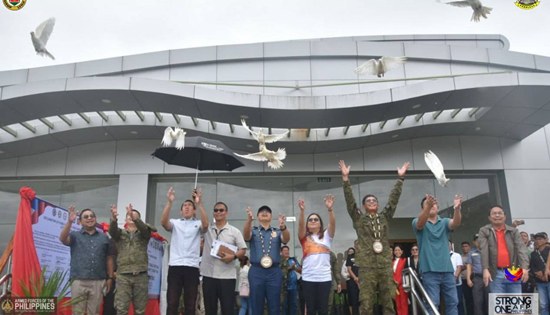
By
Pastor AL MAGNO TINIO
February 8, 2025
On February 7th, 2025, under the clear Leyte sky, a breathtaking
spectacle unfolded. More than a ceremony, it was a testament to the
indomitable spirit of Baybay City. As white doves ascended, their
wings catching the sunlight, they carried with them not just
feathers, but the hopes and dreams of a community reborn. These
weren't mere birds; they were living symbols of purity, cleansing
the city of the past's shadows and ushering in a new era of peace.
This declaration of Stable Internal Peace and Security Condition (SIPSC)
marked a pivotal moment, a victory hard-earned through shared
sacrifice and unwavering commitment. It was a profound
acknowledgment of the resilience of the Baybayanons, their strength
forged in the crucible of conflict.
The ceremony itself was a symphony of emotion: palpable relief,
cautious optimism, and a profound sense of gratitude. Mayor Jose
Carlos L. Cari's words, heavy with the weight of years spent
striving for peace, resonated deeply. His voice, a chorus of thanks
to the Philippine Army, the Philippine National Police, and the DILG,
echoed the collective sentiment. Their collaboration, a powerful
embodiment of the "Whole of Nation Approach," had yielded a harvest
of hope.
Brigadier General Noel A. Vestuir's commendation was more than a
formality; it was a heartfelt tribute to the sacrifices made. His
words, "The declaration… signified our hard-earned victory of
winning the peace in which some of us offered the ultimate sacrifice
to achieve," resonated with a poignant blend of loss and triumph.
The unspoken stories of bravery and loss, carried on the wind
alongside the doves, served as a solemn reminder of the price of
peace. Yet, amidst the sorrow, a brighter future emerged, painted
in the hopeful white of those soaring birds.
The signing of the Memorandum of Understanding (MOU) and Pledge of
Commitment was not merely bureaucratic; it was a sacred promise, a
collective vow to safeguard the delicate bloom of peace. This
promise, carried on the wind, whispered a hope for a transformed
Baybay City – a city where children's laughter would finally silence
the echoes of conflict.
This SIPSC declaration is not an ending, but a glorious dawn after a
long, dark night. It stands as a testament to the enduring spirit of
the Baybayanons, a beacon of hope illuminating a future where peace
and understanding reign supreme. The path ahead may hold challenges,
but today, in Baybay City, hope takes flight. The doves' ascent is
a potent visual metaphor for the boundless possibilities that lie
ahead – a city liberated from conflict, empowered to build a better
tomorrow. A tomorrow where children play freely, and families plan
for the future without fear. In Baybay, the future is not just
bright; it is soaring.
Demonic attacks on the
rise
By
Fr. ROY CIMAGALA,
roycimagala@gmail.com
February 3, 2025
THIS should be no surprise
to us. With the way things are now – new technologies offering more
temptations than real advantages, and people spiritually and morally
impoverished – what can we expect? That’s why requests for exorcism
and deliverance have dramatically increased these days, not to
mention the increasing cases of mental illness, psychological
disorders, suicide, etc.
We should never take the
devils for granted. They are always around, ever scheming and
plotting against us in many, many ways, and often in a manner that
is so subtle that we may not even notice them. As St. Peter would
put in his first letter: “Your adversary, the devil, prowls around
like a roaring lion seeking someone to devour.” (5,8)
We should never consider
the devils as a myth, or as some kind of literary device only to
highlight a point in the drama of our life. They are as real as you
and me. Our problem is that we think lightly or, worse, falsely of
them. And so, we become completely unprepared to deal with their
antics.
But in spite of that
unfortunate fact of life, we should remember that the devils cannot
do anything against us unless allowed by God. And if allowed, it is
because God in his mysterious providence can always draw a greater
good from any evil the devils may cause in us.
We need to have a good
grip on this rapidly emerging menace. And the first thing to do is
to entertain the possibility that indeed these people who are
disturbed by evil spirits are both mentally sick and demonically
bothered.
Yes, while it’s true that
the predicament can be an either-or proposition, we should not
dismiss the possibility that it can also be a both-and one. Not just
disjunctive, but also conjunctive. Let’s remember that the devil is
always around. It’s not paranoia to be always alerted of the devil’s
existence and his constant efforts to destroy us, usually in very
sweet ways.
It would be good if we
level up in our knowledge of psychology. This field of science is
getting to be more and more relevant these days. It cannot anymore
be the exclusive interest of some people. Everyone should know at
least the basics of psychology and from there start accumulating
relevant helpful information.
But we should never forget
that the psychological and mental mechanism of a person is steeped
in his spiritual dimension that can lead him either to the
supernatural or infranatural world. It cannot be studied from the
point of view of empirical science alone. It has to input the truths
of faith to enable it to cope with the full range of its
possibilities.
This is a point that
should be taken more seriously these days. The complicated
challenges of our times that have brought about many good things and
also many bad things cannot but make this kind of demand. We have to
take our faith more seriously, assimilating it in our system and
making it the guide and shaper of our lives.
With our faith, we have
the answer to all the questions, the solution to all our problems,
even if the answers and solutions it offers may not be the ones we
want. But they are the answers and solutions that God himself gives,
and not just us.
Faith is the great healer,
the constant pacifier, because it brings Christ into our lives,
Christ who heals and who constantly tells us, “Do not be afraid...”
We should bring our faith to bear on our sciences and on our other
sources of knowledge.
“Today is born our
Savior, Christ the Lord”
By
Fr. ROY CIMAGALA,
roycimagala@gmail.com
December 25, 2024
THAT’S the Good News of
great joy for all of us! Let us take time to savor the significance
of Christmas so that whatever happens in our life, however the
twists and turns of life may take us, we are assured that we have a
Savior who will take care of us in all our conditions, whether good
or bad.
In one of the readings of
the Mass for Christmas, from the Letter of St. Paul to Titus, we
read the following assurance: “The grace of God has appeared, saving
all and training us to reject godless ways and worldly desires and
to live temperately, justly, and devoutly in this age, as we await
the blessed hope and appearance of the glory of our great God and
savior Jesus Christ, who gave himself for us to deliver us from all
lawlessness and cleanse for himself a people as his own, eager to do
what is good.” (2,11-14)
May we never give in to
the subtle tricks of the enemies of our soul – our wounded flesh,
the allurements of the world, and the devil himself—who would urge
us to fall into discouragement, despair and hopelessness. We have
everything that we need to be what God wants us to be, despite
whatever failings we will always have.
But let’s go through some
process of lifelong training under Christ’s guidance, if not with
Christ himself, so that we would learn to live as true children of
God as God wants us to be. In this regard, let us learn how to deal
with our weaknesses, temptations and all evil and negative things we
have to contend with in this life.
That Christ allowed
himself to be tempted (cfr. Lk 4,1-13) means that he wants us to
know how to deal with temptations. As we can see in that episode,
the temptations the devil played on Christ involved good things but
poisoned with a bad intention. Temptations are always like that –
they will always be based on something good since evil cannot exist
without being anchored on something good and true which it tries to
distort and corrupt.
Like Christ, what we
should do is to clarify the real intent and purpose of the good and
the true that the devil and the tempter want to distort. This can
only happen if we refer the temptation to God himself, and not just
to ourselves and much less to the tempter himself. In the
temptations of Christ, Christ clarified things to the devil.
Once we realize the real
intent of the good and the true that the tempter uses with
deception, let us make use of the very urgings and promptings that
the temptation provokes in us to pursue the real intent of the good
and the true as defined by God and described by the many
instrumentalities we have in the Church.
Indeed, temptations can
occasion a great good if we would only know how to see the good and
the true that they try to distort, and then channel their urgings to
do the real good and the true as defined by our Christian faith.
To be sure, this way of
reacting to temptations will give us peace and joy, and a drive and
a zeal to do good. It will start to heal our spiritual and moral
weaknesses. In a sense, temptations, if dealt properly, can be a
great gift!
MERRY CHRISTMAS TO ALL!
Clemency is closing a
bitter chapter
A press statement of the
Ecumenical Bishops’ Forum (EBF) on Mary Jane Veloso clemency
December 10, 2024
After close to fifteen
years of imprisonment, the Ecumenical Bishops’ Forum joins other
groups in urging the Philippine Government to grant full clemency to
the detained mother of two boys – Mary Jane F. Veloso. This, after
the Indonesian Government agreed to the repatriation of Veloso to
the Philippines. Meanwhile, those responsible for Veloso’s arrest
after she was arrested as a “drug mule” at an Indonesian airport
were also arrested and jailed.
Mary Jane F. Veloso has
long become the living symbol of what Filipino overseas workers
undergo while seeking a job elsewhere and after they land a job.
They endure a myriad of suffering at the hands of merciless persons
who take liberties of their gullibility while seeking overseas
employment.
We rejoice at the
magnanimity of the Indonesian Government and the diplomatic efforts
of the Philippine Government. We hope that the Philippine Government
will complete the joy of the family by extending full clemency to a
person vexed so wrongly and for a long time. The season of Advent
calls for such. She has endured a lot. Lessons from her have been
drawn. We congratulate the Indonesian and Filipino lawyers including
the National Union of People's Lawyers who provided legal assistance
to her as well as the migrant advocacy groups and other supporters
of Mary Jane around the world.
“He who sows sparingly
will also reap sparingly, and he who sows generously will also reap
generously.” (2 Cor 9:6)
Issued and signed on this
day 10 December 2024.
BISHOP Ciriaco Q.
Francisco, (Ret.) UMC
Co-chairperson, EBF
THE RT. REVD. Emelyn
Gasco-Dacuycuy, IFI
Co-chairperson, EBF
THE RT. REVD. Dindo de la
Cruz Ranojo, IFI
General Secretary, EBF
BISHOP Joel E. Tendero,
UCCP
Treasurer, EBF
BISHOP Emeritus Deogracias
S. Iniguez, Jr., DD.
Auditor, EBF